

Election Integrity Case Study — Part 2
Rejected Ballots, Signature Verification, and the Cure Process

2020 General Election — Honolulu County, Hawaiʻi
Part 1 established the foundational context:
1️⃣ what system was used
2️⃣ what records exist
3️⃣ where consistency appears
4️⃣ where questions naturally arise
Election Integrity Case Study

There is a difference between trusting an election and understanding how it worked.
Part 2 moves into the most consequential checkpoint in a vote-by-mail election:
How ballots are rejected, reviewed, and cured.
This is where confidence is either built—or lost.
Not through commentary or narrative framing, but through procedure, documentation, and transparency.
This review does not assess outcomes. It examines how decisions are made, where discretion exists, and how errors are addressed.
Scope of This Review
This section focuses on three tightly related areas:
Rejected or invalidated ballot envelopes
Signature verification procedures
The voter cure process
The goal is not to argue conclusions, but to understand:
✔️how judgment is applied
✔️where discretion exists
✔️and how errors are resolved
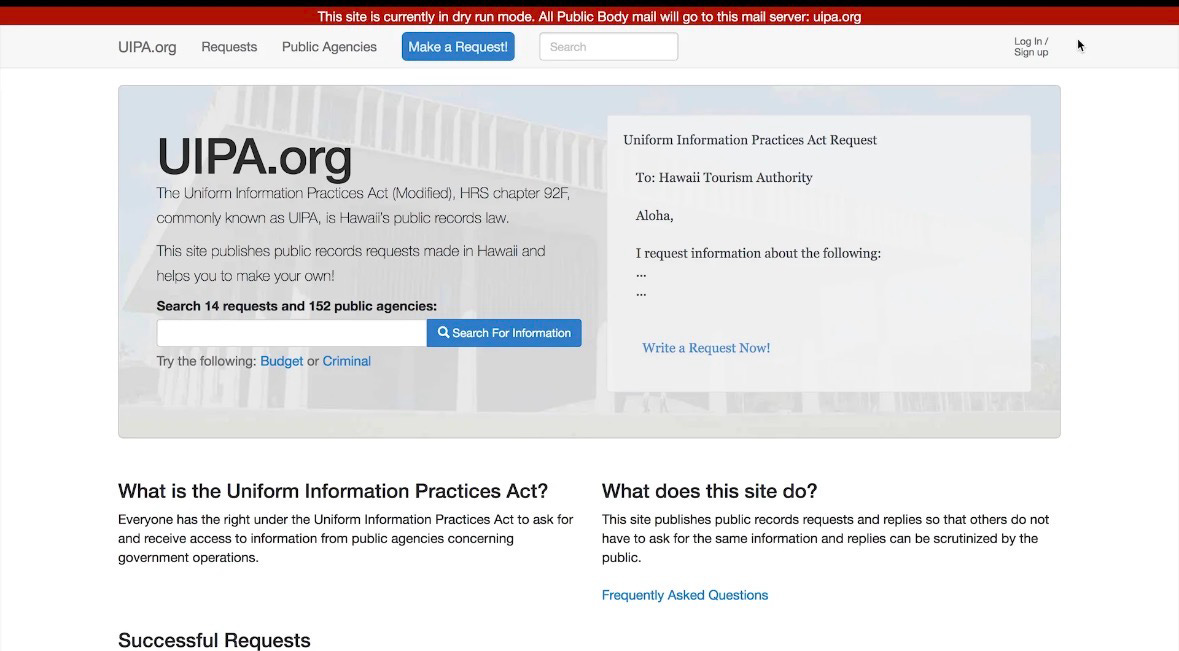
The analysis relies on records maintained by the election authority and made accessible through Hawaiʻi’s public-records law.
🌺 Public Records Framework in Hawaiʻi
Election records held by county agencies in Hawaiʻi are governed by Hawaiʻi Revised Statutes Chapter 92F, known as the Uniform Information Practices Act (UIPA).
Under UIPA:
Existing government records maintained by an agency are public unless a specific statutory exemption applies.
This includes written procedures, training materials, aggregate statistics, and reconciliation documents—provided those records exist.
The Hawaiʻi State Capitol — Architecture as Process

[Hawaiʻi State Capitol, shown for civic and transparency context.]
The image shown here is the Hawaii State Capitol, home to Hawaiʻi’s legislative and executive branches.
Unlike most U.S. capitols, the building has no enclosed dome. Its open-air design reflects Hawaiʻi’s climate and was intended to symbolize openness, accessibility, and transparency in governance.
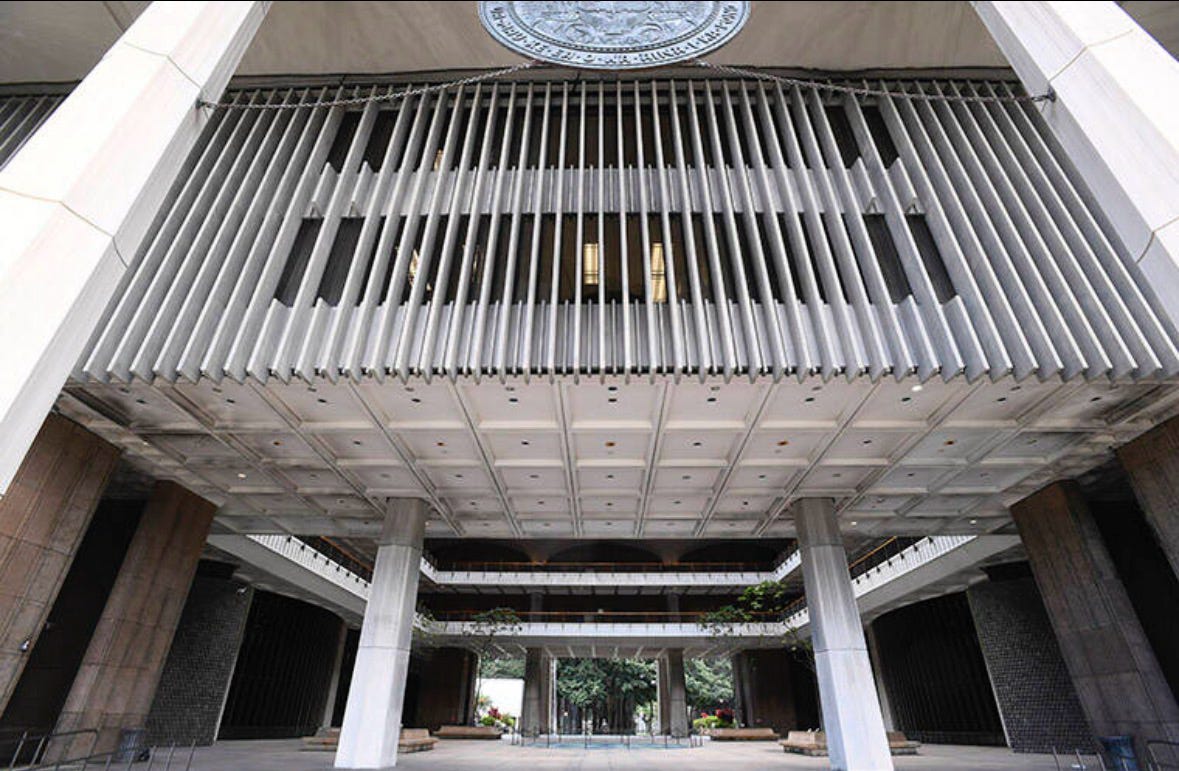
The structure is supported by forty columns, representing Hawaiʻi’s counties as envisioned at the time of construction. The surrounding reflecting pool— visible at ground level—symbolizes the Pacific Ocean, with the building rising from it like volcanic forms.
This architectural choice mirrors the principle underlying public-records law:
that government functions, decisions, and processes are meant to be observable and explainable, not sealed off from public view.

In the context of election administration, transparency is not an abstract ideal.
It is expressed through documented procedures, accessible records, and clear accountability—the very elements examined in this case study.
Election Administration Authority
For the 2020 General Election, ballot processing, verification, and tabulation for Honolulu County were administered by the Honolulu Elections Division.
https://elections.hawaii.gov/
This case study examines records maintained by that office, without reference to external commentary, media narratives, or speculation.
Hawaiʻi’s Transition to Universal Vote-by-Mail
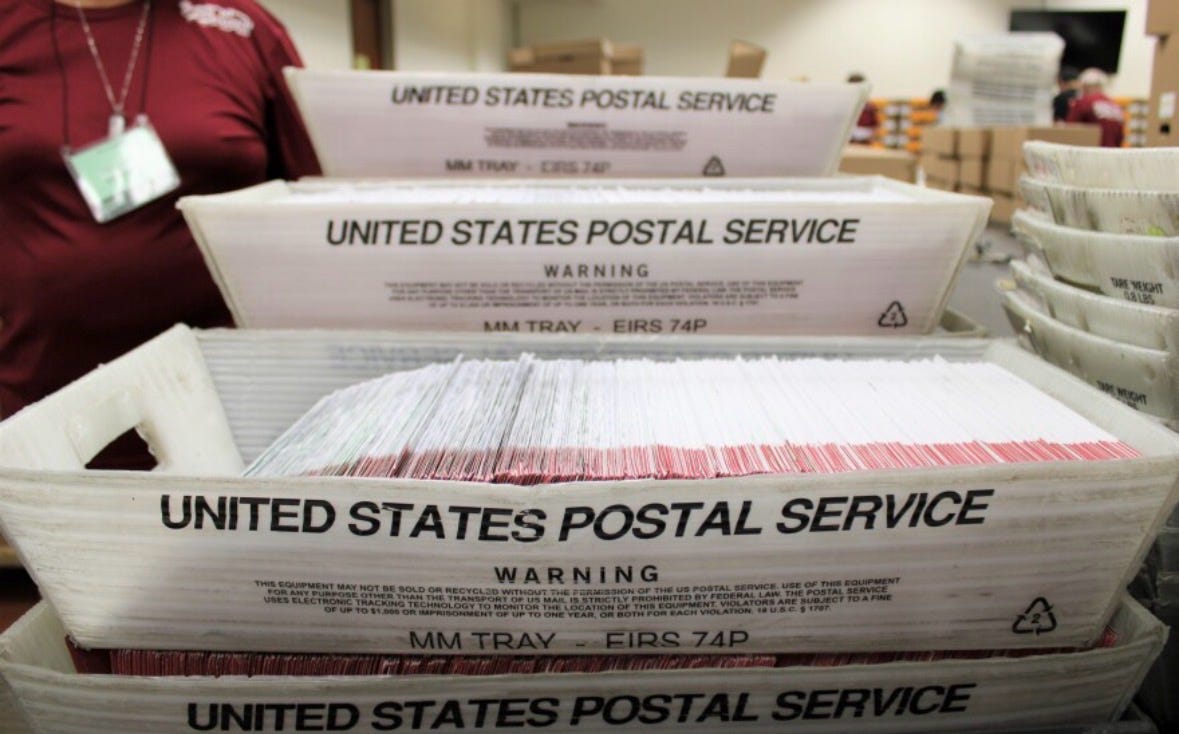
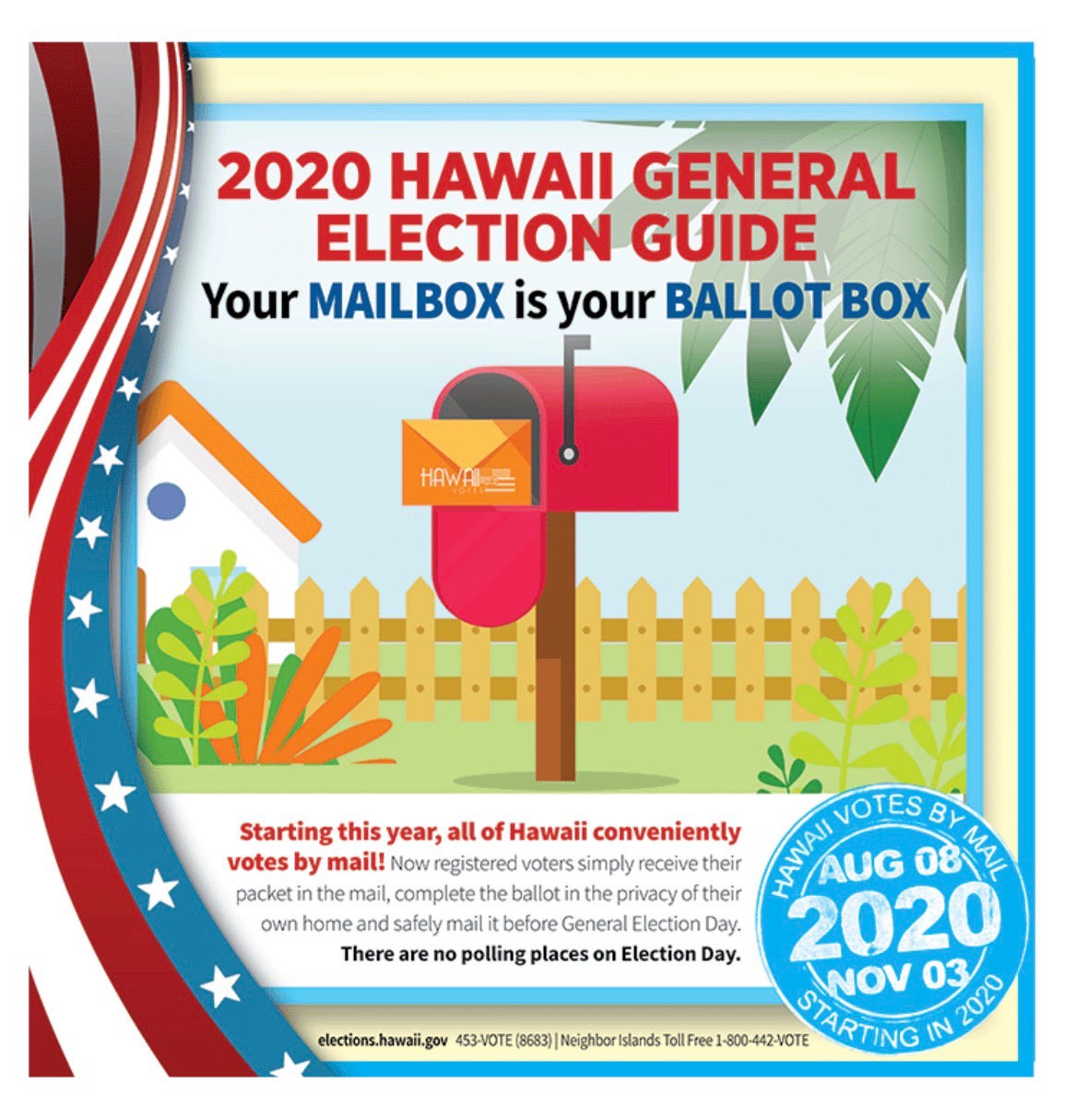
The 2020 General Election marked Hawaiʻi’s first statewide implementation of universal vote-by-mail.
Under this system, all registered voters were mailed a ballot by default, with limited in-person voting locations available primarily for accessibility, same-day registration, and voter assistance.
This transition was administered by the Hawaii Office of Elections, with county election divisions responsible for ballot processing, verification, and tabulation within their jurisdictions.
Why This Matters for Record Review
The shift to universal vote-by-mail materially changes which election processes become most consequential.
In a precinct-based system, primary integrity checkpoints include:
• polling place procedures
• machine testing and setup
• in-person voter check-in
In a vote-by-mail system, those checkpoints shift to:
• ballot issuance and tracking
• envelope signature verification
• rejection review standards
• the voter cure process
• ballot accounting and reconciliation
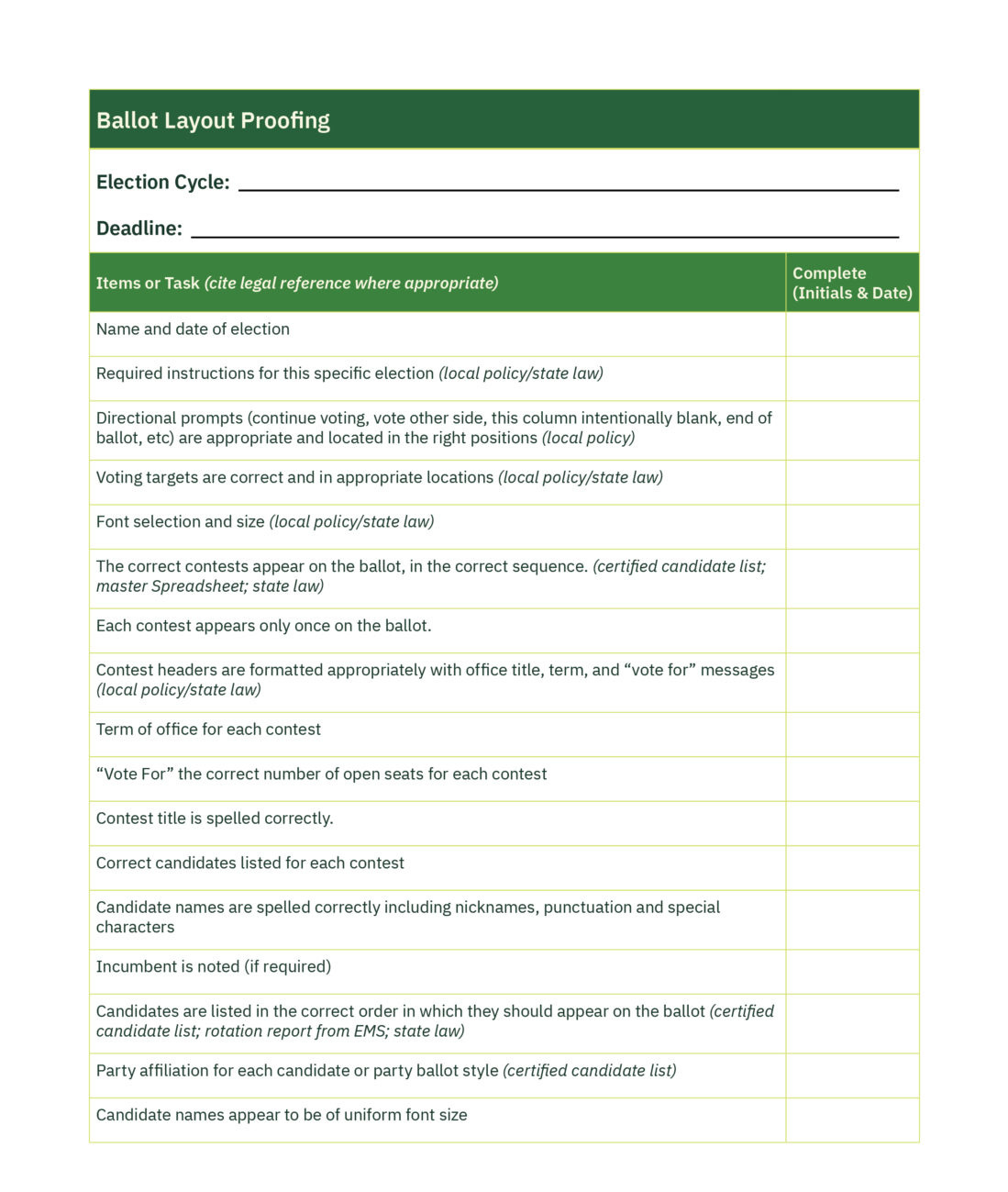
As a result, records related to signature verification, rejection categories, cure opportunities, and reconciliation totals become central to evaluating whether safeguards are functioning as designed.
Context, Not Inference
Hawaiʻi’s transition to vote-by-mail does not, by itself, indicate strength or weakness in election administration.
System changes of this scale increase reliance on written procedures, expand the role of human review, and make clear, accessible records more important.
For this reason, transparency of process records is especially relevant when examining elections conducted under a vote-by-mail framework.
This case study focuses on whether those records exist, how they are documented, and whether they are accessible under Hawaiʻi’s public-records law—not on evaluating outcomes.
Because the 2020 election was Hawaiʻi’s first conducted under a universal vote-by-mail model, the processes examined in Part 2 represent the primary integrity checkpoints for that election
1️⃣ Rejected Ballots: Categories and Application
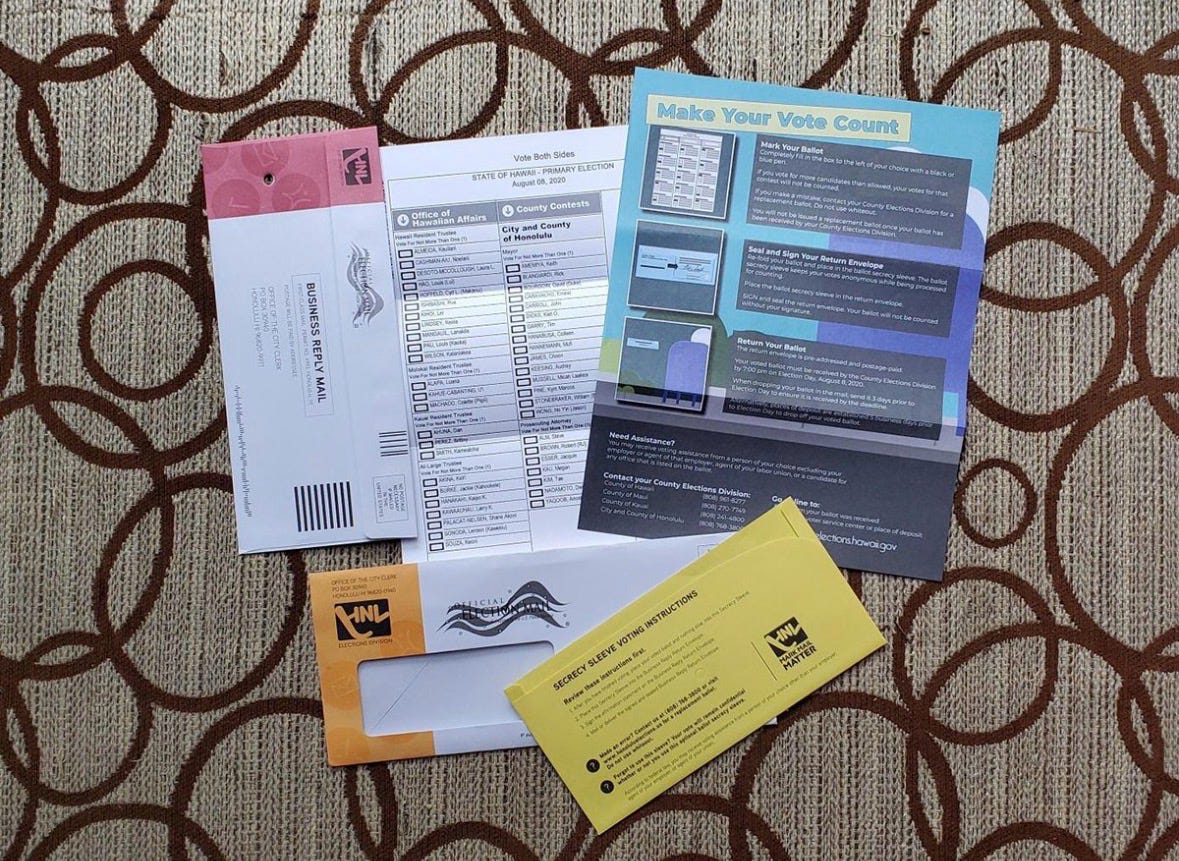
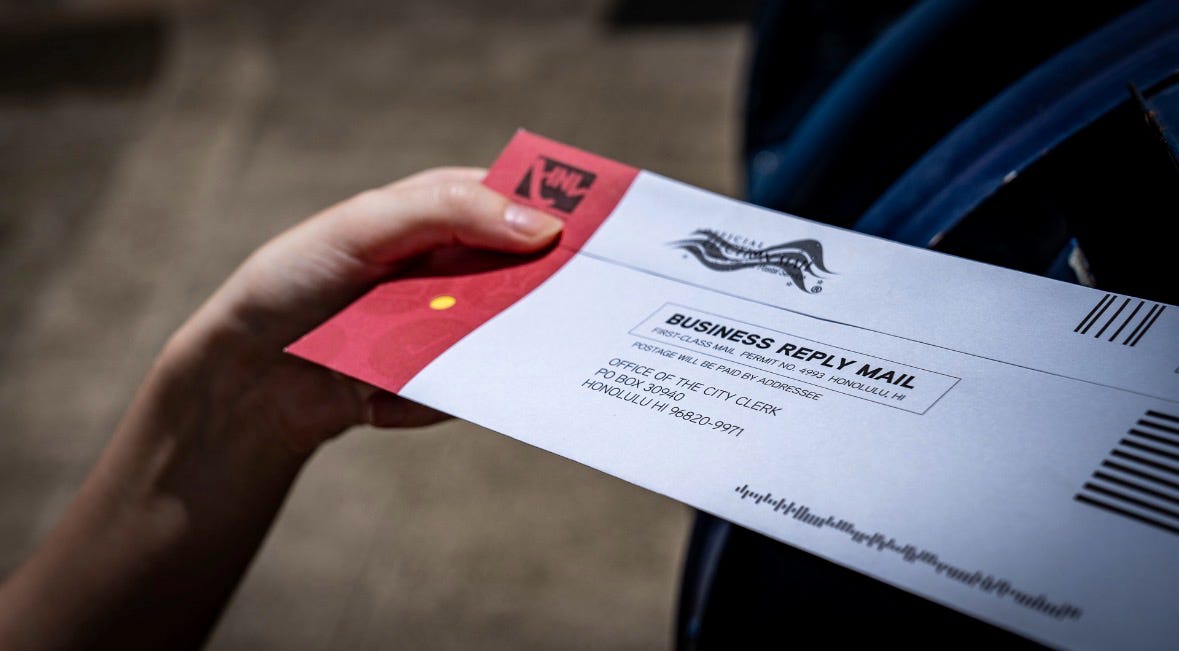
[Vote-by-mail ballot materials used in Hawaiʻi elections, shown for system context.]
In a vote-by-mail system, ballot envelopes may be flagged or rejected for defined reasons, including:
🚩missing or insufficient signatures
🚩signature mismatch
🚩late receipt
🚩noncompliant envelopes
From a process standpoint, the relevant questions are:
1. Were rejection categories defined in writing?
2. Were those definitions applied consistently?
3. Are aggregate counts available by rejection type?
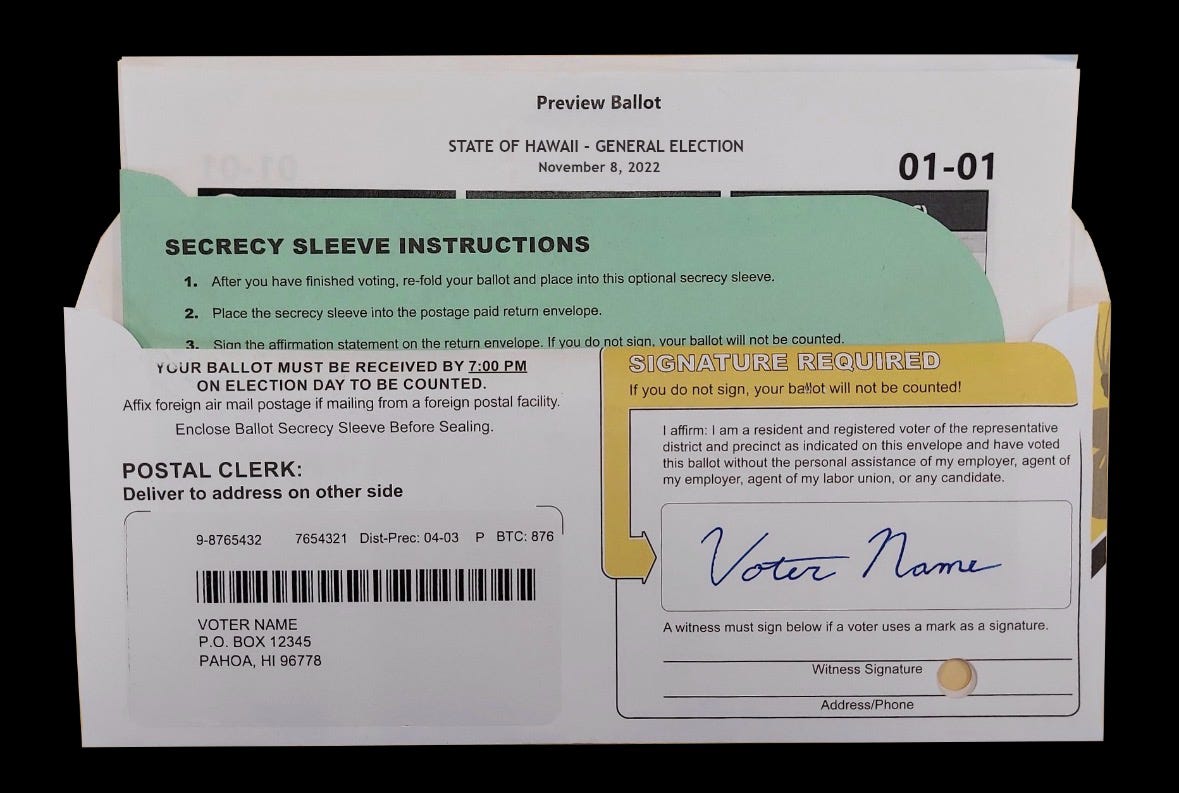
🚩 Flagging does not equal rejection. It initiates a secondary review process.
Records Examined
✔️Aggregate counts of rejected ballots by category
✔️Written definitions or criteria for each rejection reason
These records indicate whether rejection decisions were governed by documented standards rather than ad hoc judgment.
2️⃣ Signature Verification: Standards and Review
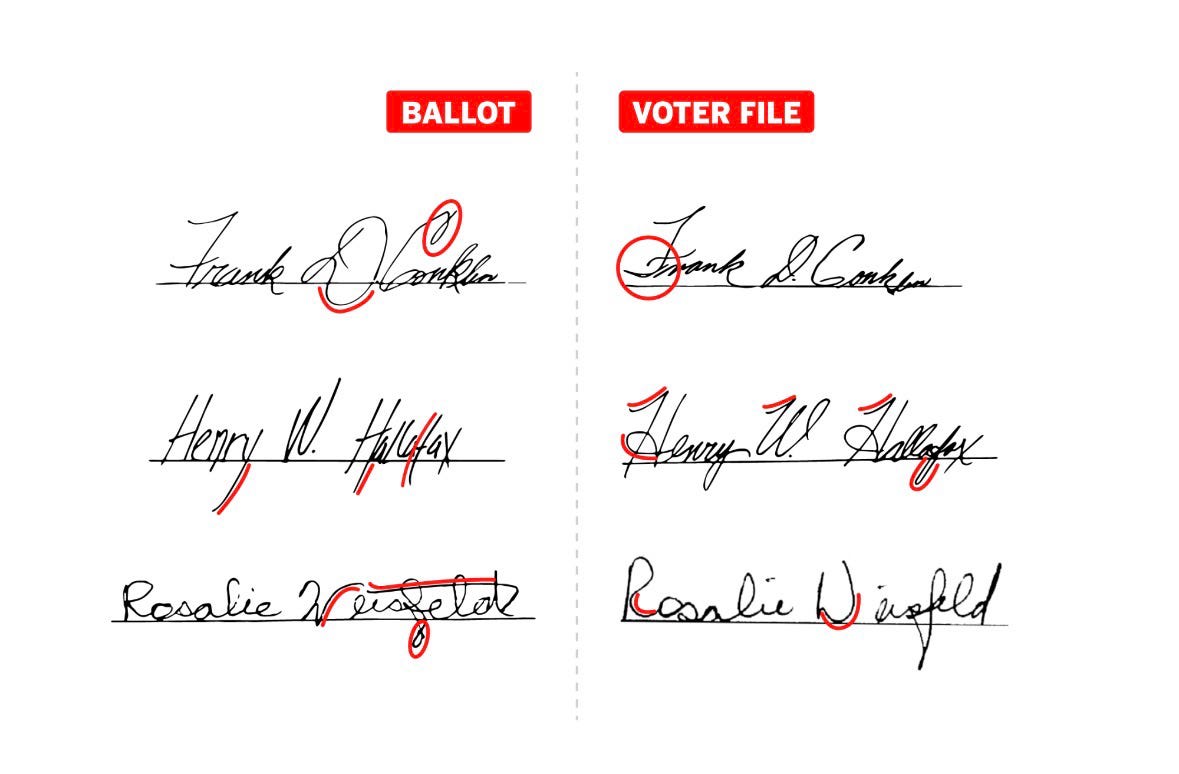
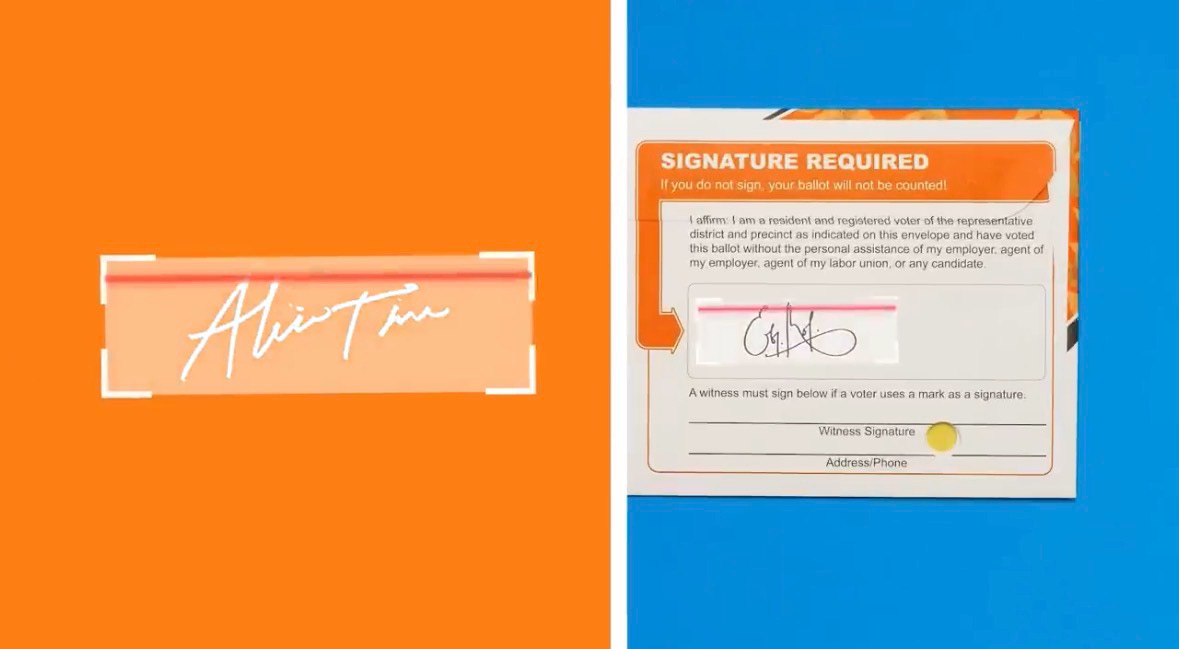
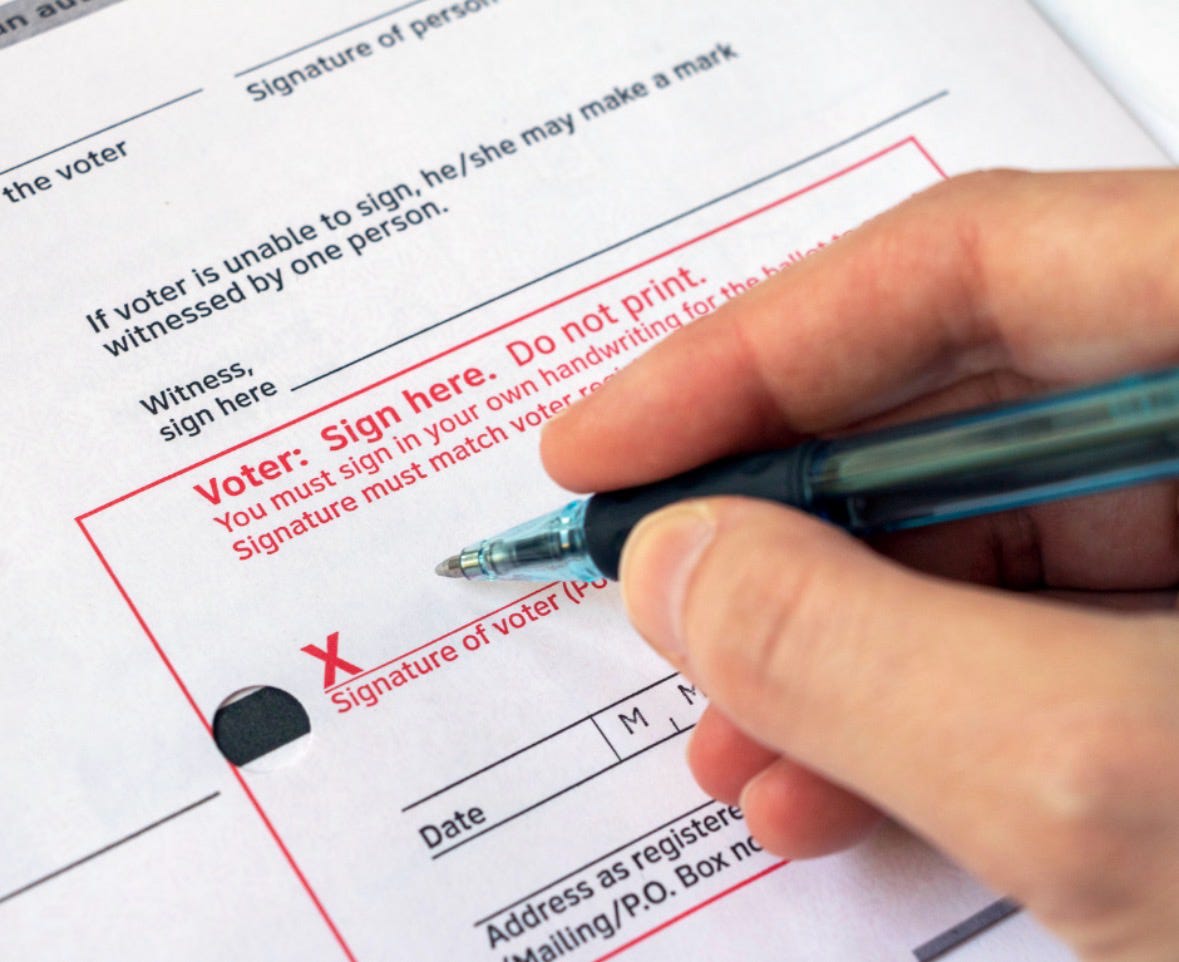
Signature verification is a judgment-based step intended to confirm voter identity—not voter intent.
Returned ballot envelopes were reviewed by comparing:
✔️the signature on the envelope
✔️against the signature on file for the voter
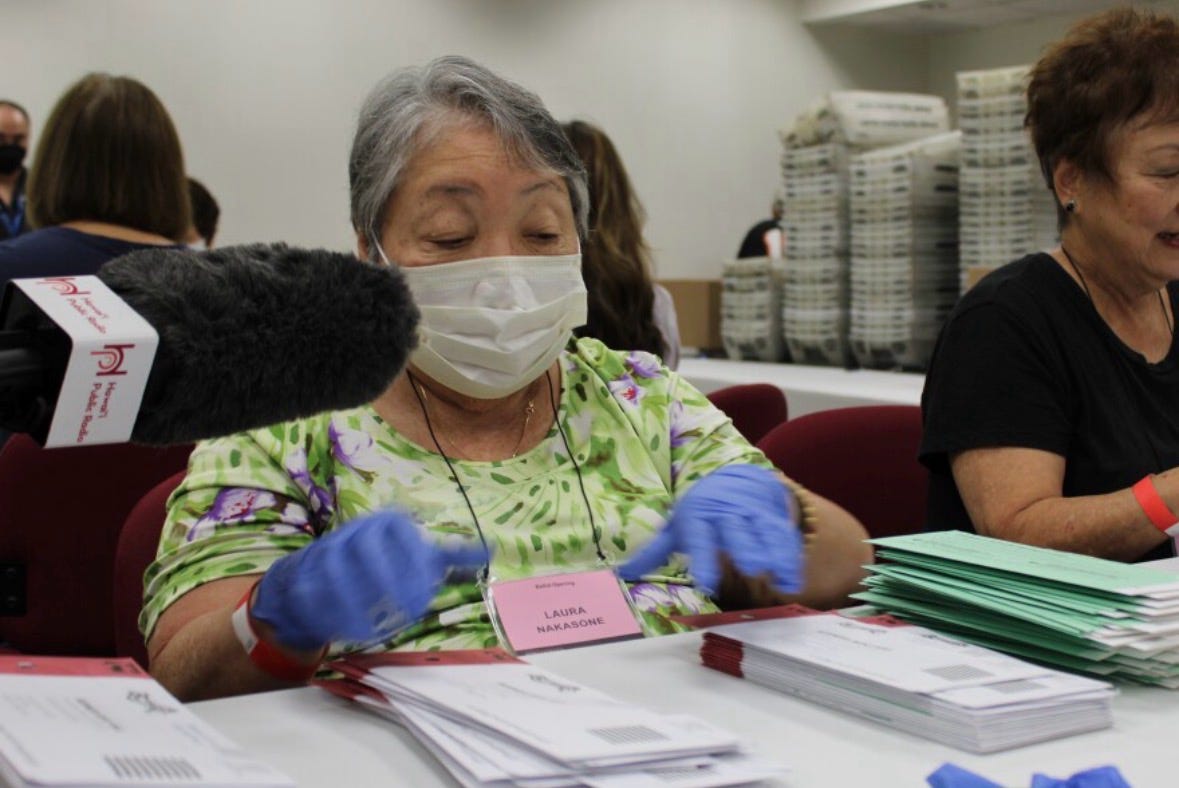
[Mail ballot envelopes undergoing administrative review, shown for process context.]
Important clarifications:
Signature verification is human-reviewed, not fully automated
Minor variation does not automatically result in rejection
When a signature is flagged, the ballot is not immediately discarded
This distinction is often lost in national discussions.
Key Process Considerations
Were signature reviewers trained using written standards?
Did written guidance define acceptable signature variation?
Was a secondary or escalation review available for unclear signatures?
Records Requested:
Signature verification procedures or manuals
Reviewer training materials
Written guidance on signature determinations
Secondary or escalation review procedures
These records clarify how discretion was structured and constrained.
3️⃣ The Cure Process: Opportunity for Correction
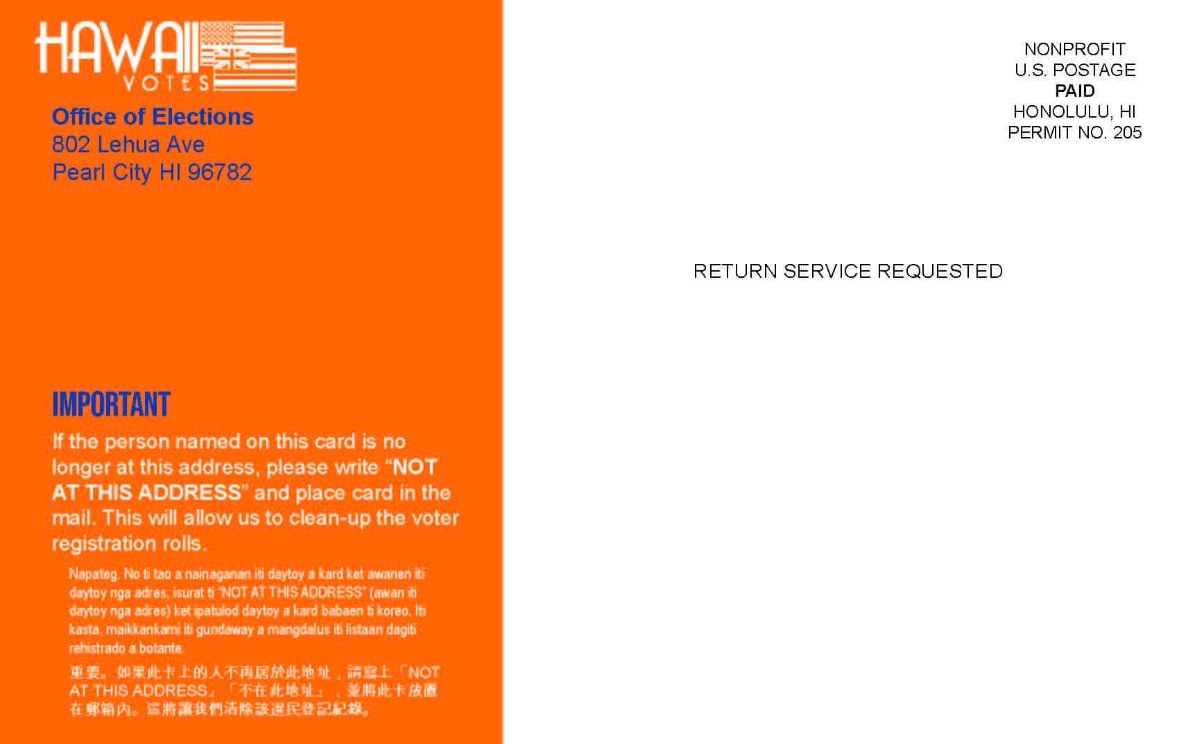
The cure process exists to ensure that eligible ballots are not rejected due to clerical issues or signature variation.
When a ballot envelope is flagged, voters may be given the opportunity to cure the issue by verifying identity or correcting the deficiency.
From a transparency perspective, the cure process raises three questions: how voters were notified, what timelines applied, and how many ballots were cured versus rejected.
Records Requested: written cure procedures, notification templates, and aggregate cure statistics.
This process is designed to protect the voter, not penalize them.
4️⃣ Ballot Accounting and Reconciliation
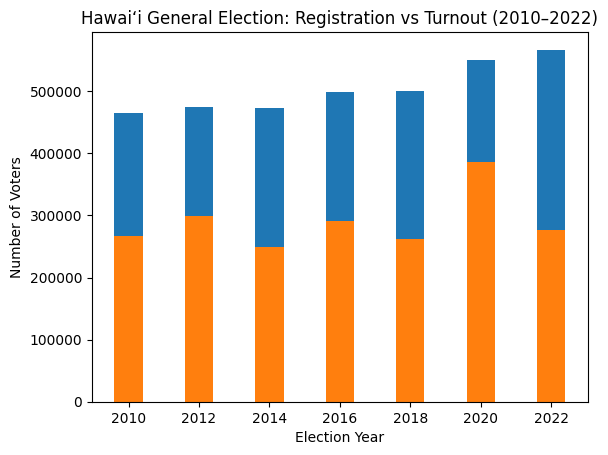
Election administration requires numerical consistency.
Ballots should reconcile across their lifecycle:
✔️issued
✔️received
✔️accepted
✔️rejected
✔️cured or duplicated
Records Requested: ballot accounting and reconciliation reports, summary tabulations, and post-election reconciliation or audit documents (if maintained).
This review focuses on whether ballot totals were documented, traceable, and internally consistent.
Methodology Note
Only aggregate process records were requested .
No voter-identifying information was requested or reviewed.
Where records are available, they will be assessed for clarity and completeness.
Where records are reported as nonexistent or unavailable, that absence is documented without inference.
Transparency Assessment
This review applies a straightforward standard:
1. Does the record exist?
2. Was it made available?
3. If withheld, was a statutory exemption cited?
No conclusions are drawn beyond what the records themselves show.
Why This Area Draws Scrutiny
Signature verification sits at the intersection of:
• security
• accessibility
• human judgment
Because it is neither purely mechanical nor purely discretionary, it is often misunderstood.
Public debate tends to polarize into two extremes:
✔️claims that signature checks are meaningless
✔️claims that signature checks are weaponized
Neither extreme reflects how the process actually functions.
🔎 A Clarifying Principle
Election integrity is not undermined by safeguards.
It is strengthened when those safeguards are transparent and explainable.
Public debate tends to polarize into two extremes:
✔️claims that signature checks are meaningless
✔️claims that signature checks are weaponized
Neither extreme reflects how the process actually functions.
🔎 A Clarifying Principle
Election integrity is not undermined by safeguards.
It is strengthened when those safeguards are transparent and explainable.
Public Records Request — Honolulu County
On January 2, 2026, I submitted the following public-records request to the Honolulu Elections Division under Hawaiʻi’s public-records law.
To: elections@honolulu.gov
Subject: UIPA Request — 2020 General Election Records
Request Body:
Aloha,
Pursuant to Hawaiʻi Revised Statutes Chapter 92F (Uniform Information Practices Act), I request copies of existing records maintained by the Honolulu Elections Division relating to the November 3, 2020 General Election, including:
1. Written procedures and training materials used for ballot-envelope signature verification.
2. Aggregate counts of rejected ballots by rejection category.
3. Written procedures describing the voter cure process and cure-notification templates.
4. Aggregate cure statistics, including the number of cure notices issued and ballots successfully cured.
5. Ballot accounting and reconciliation reports showing ballots issued, received, accepted, rejected, duplicated, and cured.
This request seeks aggregate process records only and does not request any personally identifiable voter information.
If any portion of this request is denied or redacted, please cite the specific statutory exemption relied upon.
Mahalo for your assistance,
[Name]
🌺 Under Hawaiʻi’s Uniform Information Practices Act, agencies are required to respond to public-records requests within 10 business days, with the option to extend the response period by up to 20 additional business days when permitted by statute.
🇺🇸Replicating This Research in Your Own State
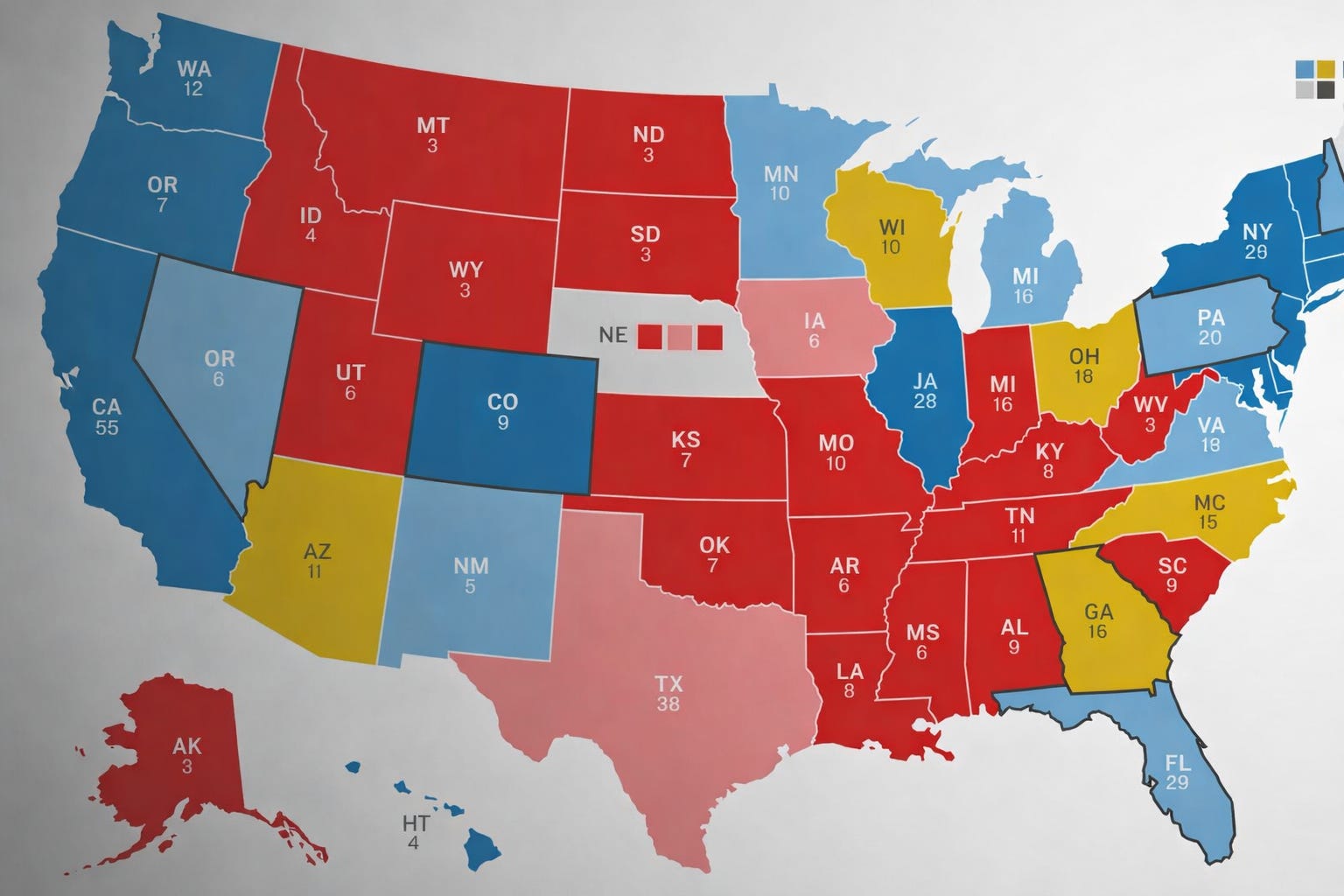
If you are interested in examining election-process transparency within your own state, I have developed a 50-State Field Guide designed for comparative public-records research.
The guide includes:
A fillable 50-state transparency tracker
A standardized public-records request template
Step-by-step instructions for logging and comparing responses
Guidance on understanding FOIA versus state public-records laws
An accompanying article will be published shortly:
Comparing 2020 Election Records Across All 50 States
A Practical Guide for Public Records Requests
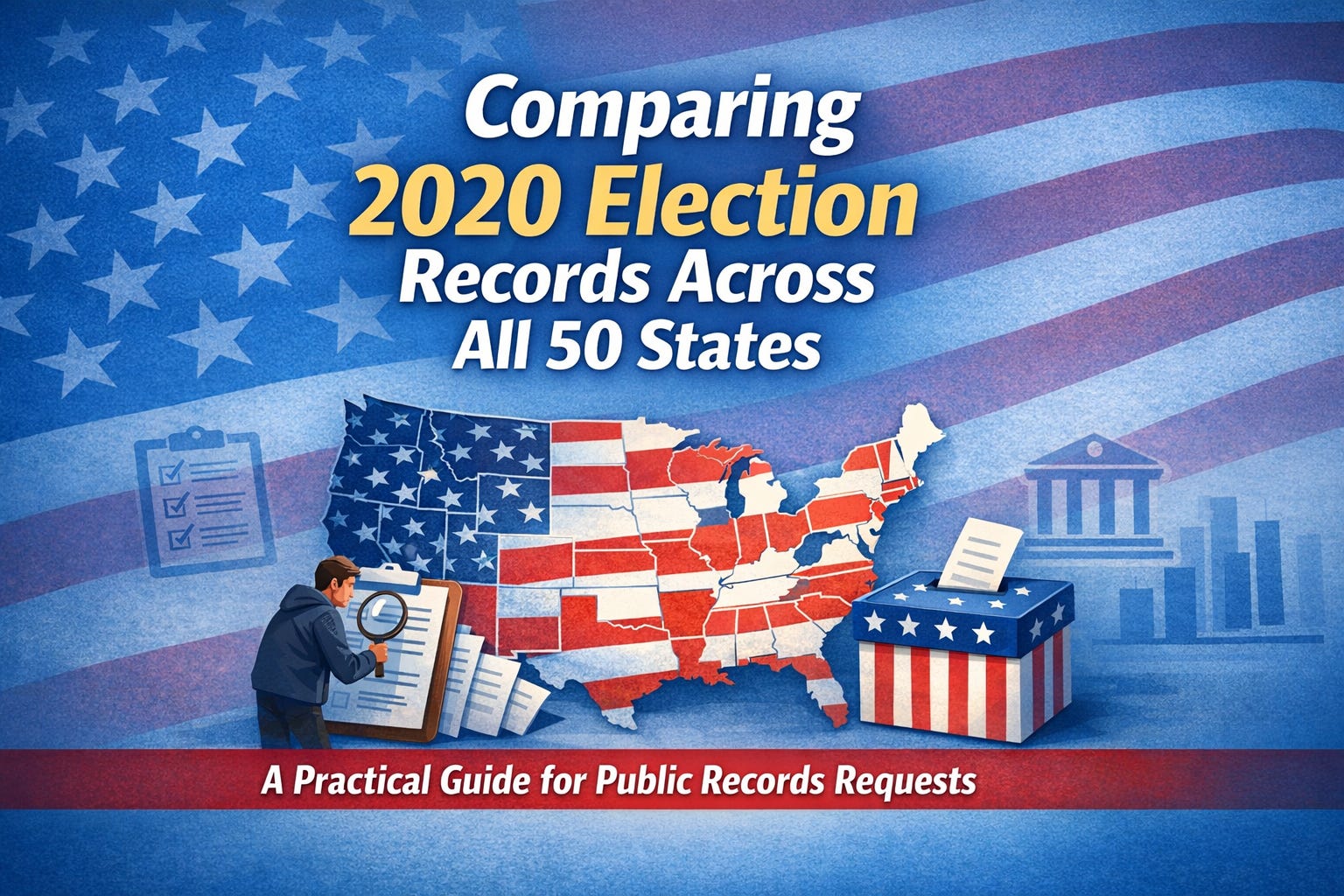
This framework does not evaluate election outcomes.
It documents whether process records exist, whether they are accessible, and how transparency varies by state.
Coming Next — Part 3
Transparency Gaps and Unanswered Questions
Part 3 of Election Integrity Case Study will outline:
1️⃣ which records were made available
2️⃣ which were not maintained or not disclosed
3️⃣ and where procedural clarity ends
Not to speculate—but to document.
Soul Sovereign is a TRUTHER MEDIA Publication and is 100% reader-supported.
👉 Follow PEPE on the BLOCK 🐸 w/ DIGI & SKY on Rumble🔻